The 2016 film Lion was celebrated worldwide as a heart-wrenching saga of Saroo Brierley, an Indian boy who got lost at age five and famously traced his birth family at the age of 30 while living in Australia as he had been adopted by an Australian couple.
The Australian movie, adapted from his autobiography A Long Way Home, was nominated for six Academy Awards.
But beneath the global applause lies blatant distortion of the autobiography, seemingly to appease Islamists and show Hinduism in a bad light.
The Real Story: Saroo’s Autobiography
In his memoir, Saroo narrates the abuse inflicted on his Hindu mother, Kamla, by his Muslim father:
He would be violent most of the time and would beat her regularly


He forcibly subjected the children to circumcision
He abandoned the family and took another wife
He tried to evict his first wife and children
He pushed the mother into hard labor as a construction worker
These raw details of trapping a Hindu woman for her conversion and subsequent abuse are central to Saroo’s real childhood trauma.
Yet, Lion completely erased this reality.
The Distortion: Enter “Ram”
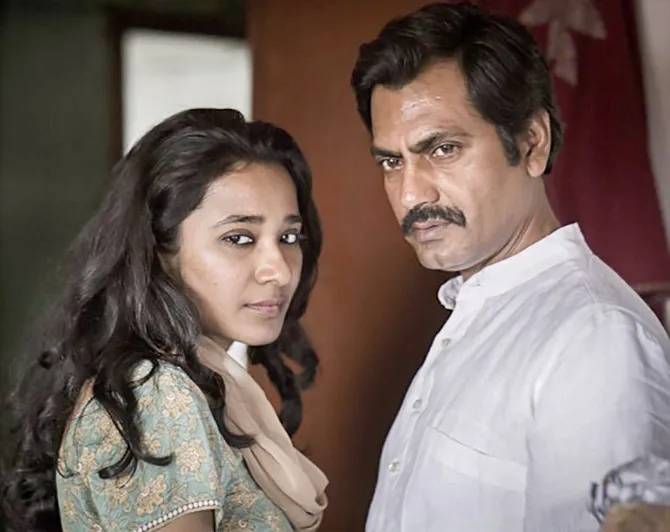
Instead of showing the Muslim father’s abuse, the film invents a character called “Ram” — a paedophile.
Yes, Ram. Not Abdul. Not Yusuf.
The name of one of Hinduism’s holiest figures was cynically used to brand a child abuser.
Bollywood actor Nawazuddin Siddiqui played this invented character, gaining global fame by spitting on the name of Lord Ram.
The book passage that inspired this sequence makes no mention of Ram or any name. It only describes a suspicious man who promised to help Saroo but made him uncomfortable. The filmmakers seem to have deliberately named the predator Ram to tarnish Hindu identity.
Below is the passage:
“The railway worker had mentioned that he knew someone who might be able to help me, and that he had arranged for this man to visit. I was overwhelmed with relief—already it seemed like the whole experience was a bad dream. Soon I would be home. I spent the day in the shack after the men headed off to work waiting for my savior. As promised, the next day another man turned up, and he also spoke carefully in plain terms that I understood. He was well dressed in a neat suit, and he laughed when I pointed at his distinctive mustache and said, “Kapil Dev,” referring to India’s cricket captain at the time, whom he looked like.
“He sat down on my bed and said, “Come over here and tell me where you are from.” So I did as he asked and told him what had happened to me. He wanted to know as much as possible about where I was from so that he could help me find the place, and as I tried my best to explain everything, he lay down on the bed and had me lie down beside him.
“Many lucky and unlucky things happened to me on my journey, and I made good and bad decisions. My instincts weren’t always sound, but they had been sharpened by weeks of living on the streets making conscious and unconscious decisions based on a perceived cost/benefit analysis. When we survive, we learn to trust our instincts. Perhaps any five-year-old would have begun to feel uneasy lying beside a strange man on a bed. Nothing untoward happened, and the man didn’t lay a hand on me, but despite the marvelous, intoxicating promises I was being made about finding my home, I knew something wasn’t right.”
The Questions Indians Must Ask:
• Why was the Muslim father’s abuse erased?
• Why was a Hindu deity’s name chosen for a paedophile?
• Why was the global audience misled with a “cleaned up” story of Muslim violence, but a manufactured tale of Hindu depravity?
Pattern of Narrative Warfare
This is not an isolated case. It fits a larger pattern where:
• Islamist crimes are erased or softened.
• Hindu deities and symbols are demonised, often linked to obscenity or crime.
• Global platforms and festivals push such distortions under the guise of “art.”
Lion may have been marketed as a story of love, loss and reunion, but at its core, it smuggled in Hindu hate propaganda, rewriting facts to suit a global agenda.